

Cool Grid
Alighiero Boetti, Enrico Castellani, Bernard Frize, Sergio Lombardo, Allan McCollum, Sean Shanahan, Jonathan VanDyke, Victor Vasarely, Stanley Whitney.
1/9unosunove is pleased to present Cool Grid, a group exhibition that explores the theme of compositional minimalism and contemporary abstraction through the works of nine internationally renowned artists from different generations: Alighiero Boetti (Turin, IT, 1940 – Rome, IT, 1994), Enrico Castellani (Castelmassa, IT, 1930 – Celleno, IT, 2017), Bernard Frize (Saint-Mandé, FR, 1954), Sergio Lombardo (Rome, IT, 1939), Allan McCollum (Los Angeles, US, 1944), Sean Shanahan (Dublin, 1960), Jonathan VanDyke (Brooklyn, NY), Victor Vasarely (Pécs, HUN, 1906 – Paris, FR, 1997) e Stanley Whitney (Bryn Mawr, Pennsylvania, US, 1946). The exhibition marks 20 years of activity of 1/9unosunove.
The unifying theme of the exhibition is the abandonment of a lyrical, early-twentieth century form of abstraction in favor of a kind of painting that embraces the scientific, mathematical, and optical principles characteristic of the new directions that emerged in the 1960s and ’70s and have continued to evolve to the present day. At the foundation of this new “grid,” into which art is inserted, lie the analysis and deconstruction of the fundamental principles of visual composition, geometric precision, and the interaction between form and color as a field of action that is no longer merely sensory but mathematical. This new approach based on rules and schemes thus becomes a metaphor for the process of visual exploration that goes beyond the first aesthetic impact, inviting the viewer not to settle for mere looking but instead to adopt a more dynamic, multisensory, and interactive approach, capable of discovering unexpected meanings across the work’s different layers of interpretation.
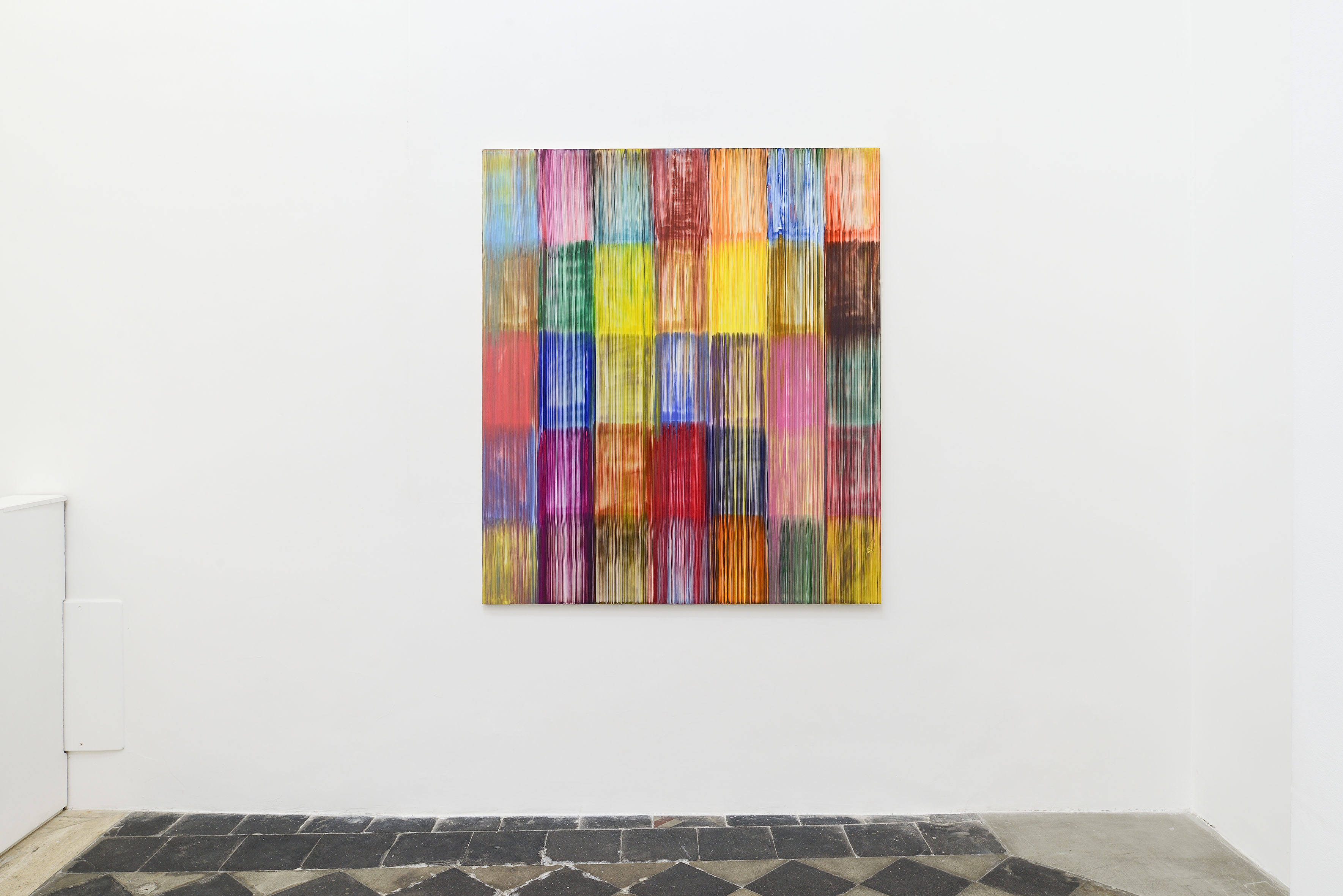
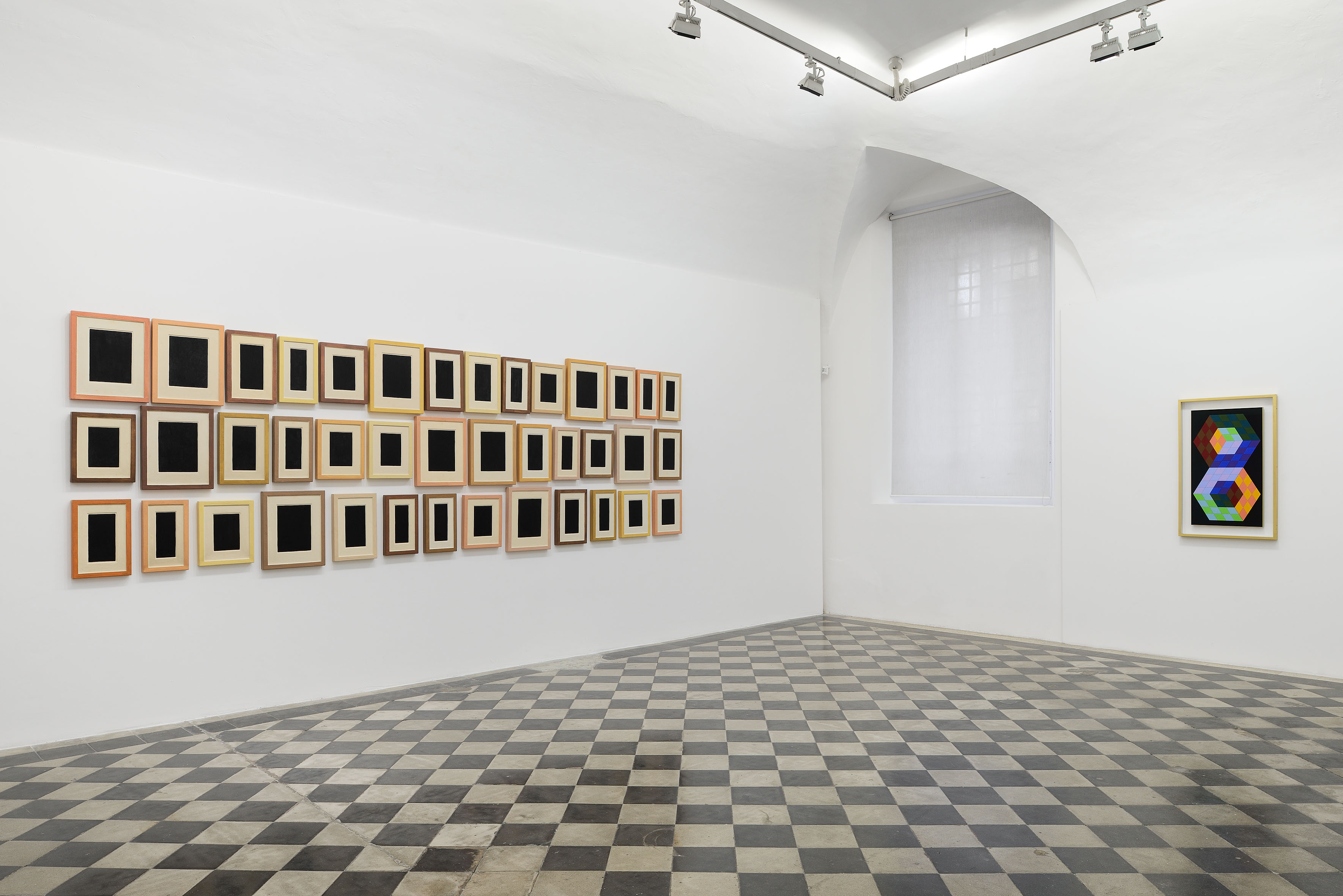
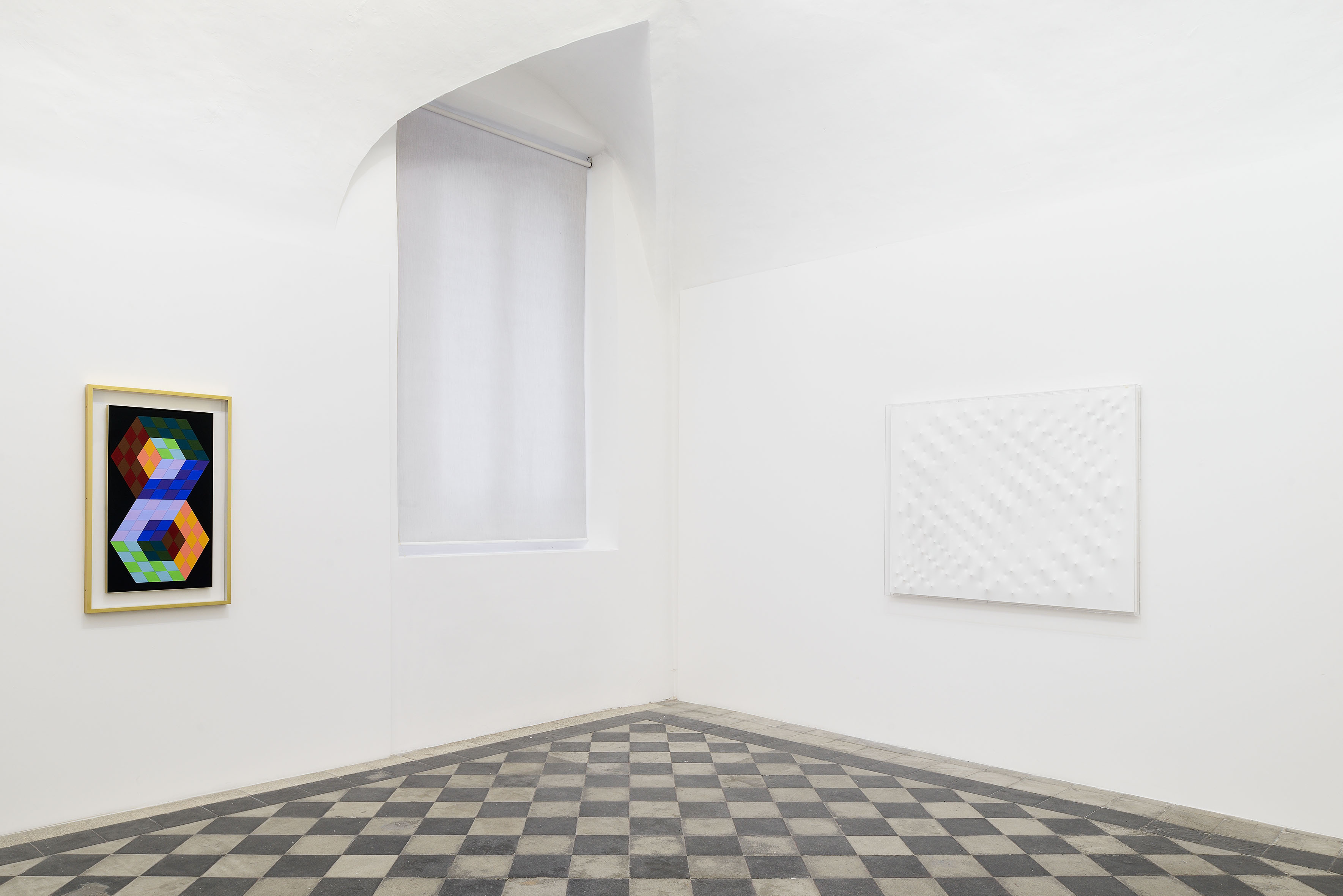
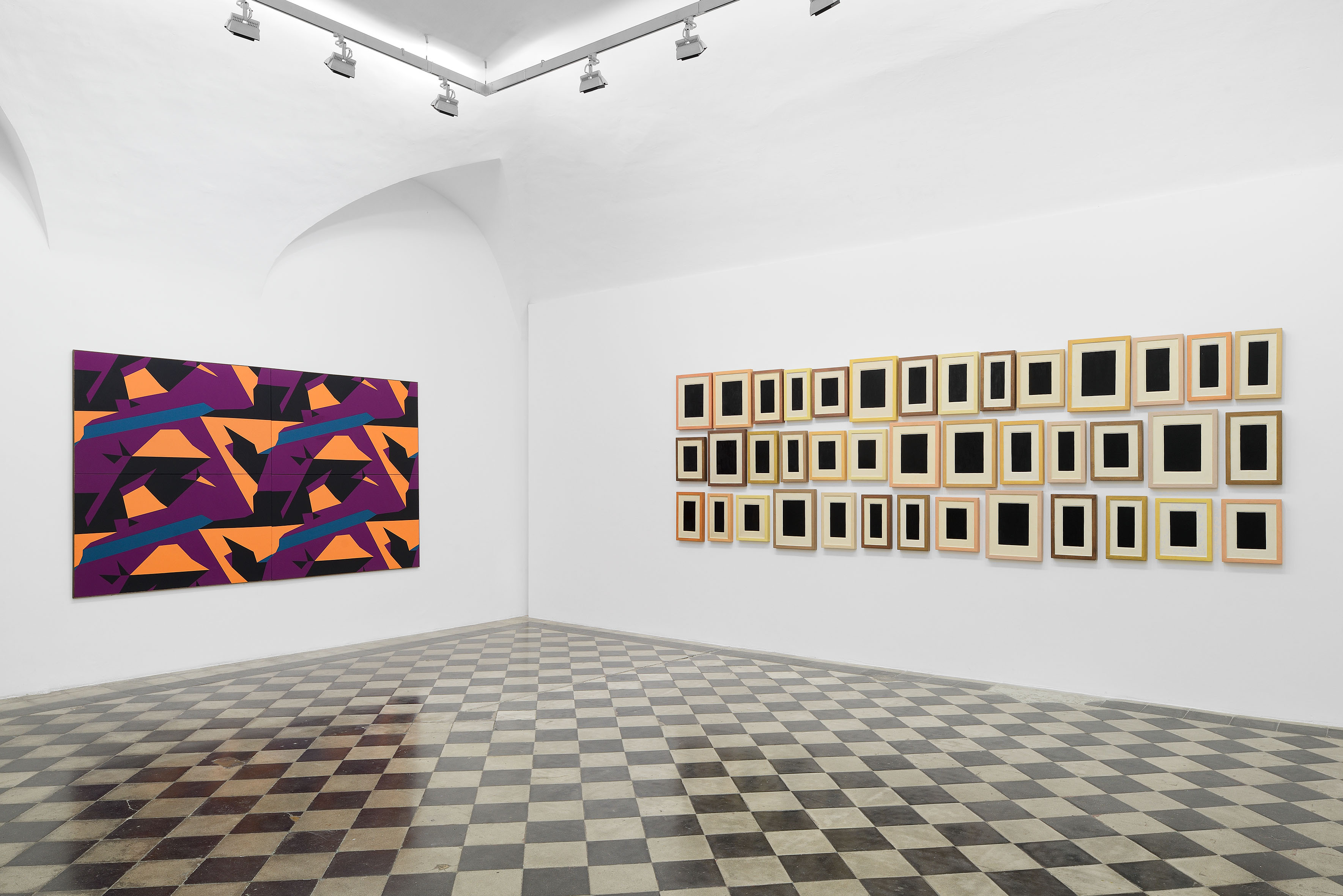
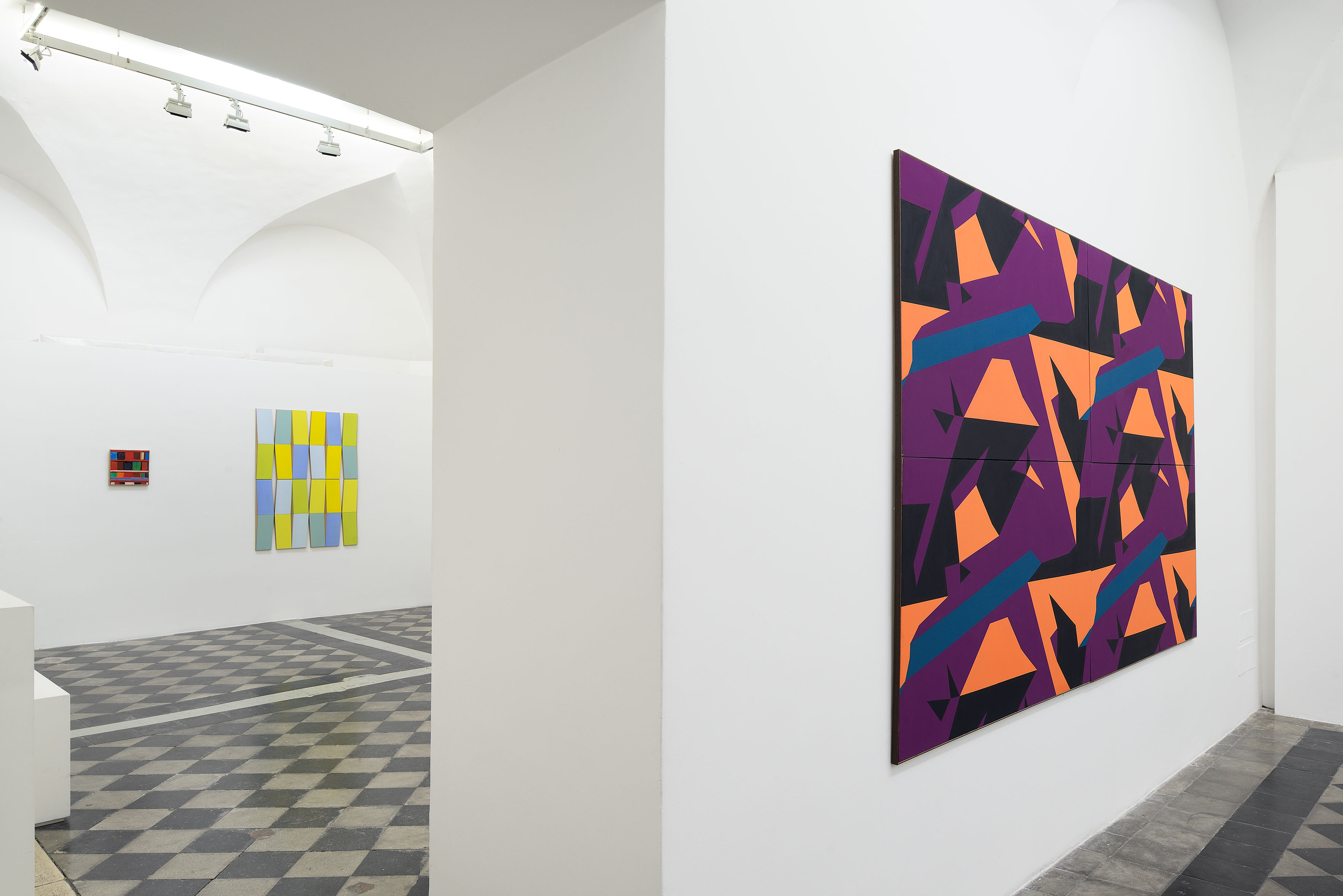
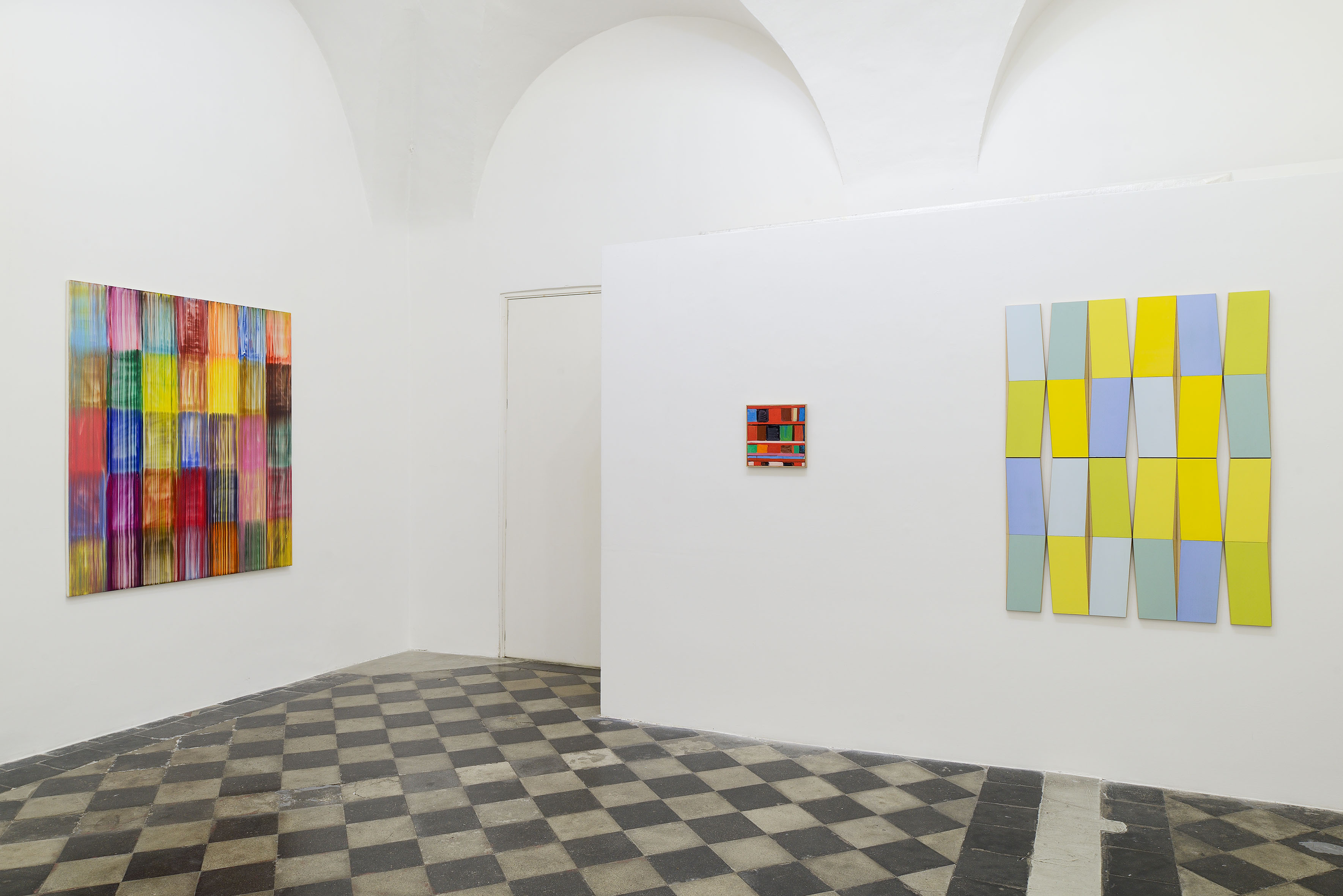
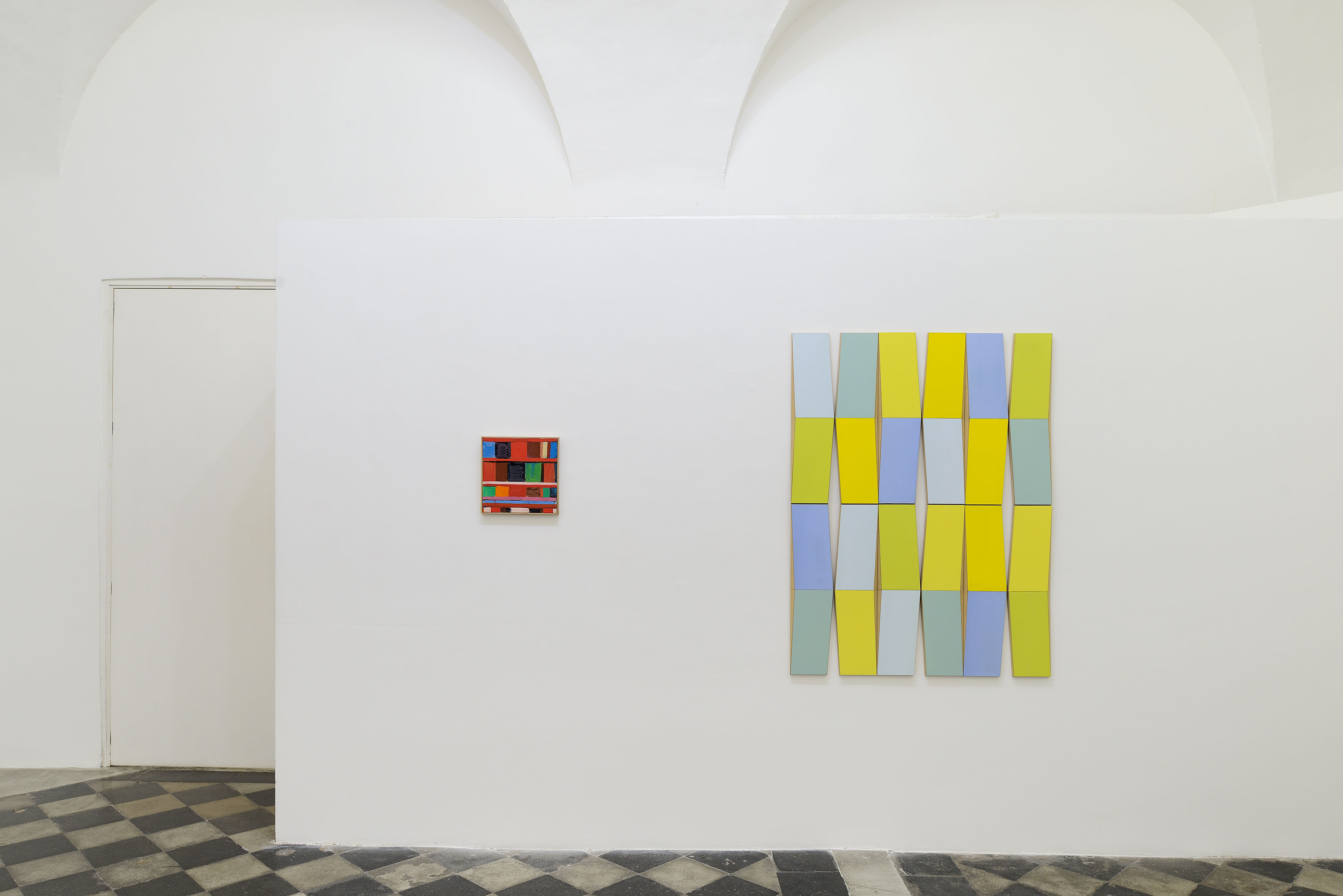
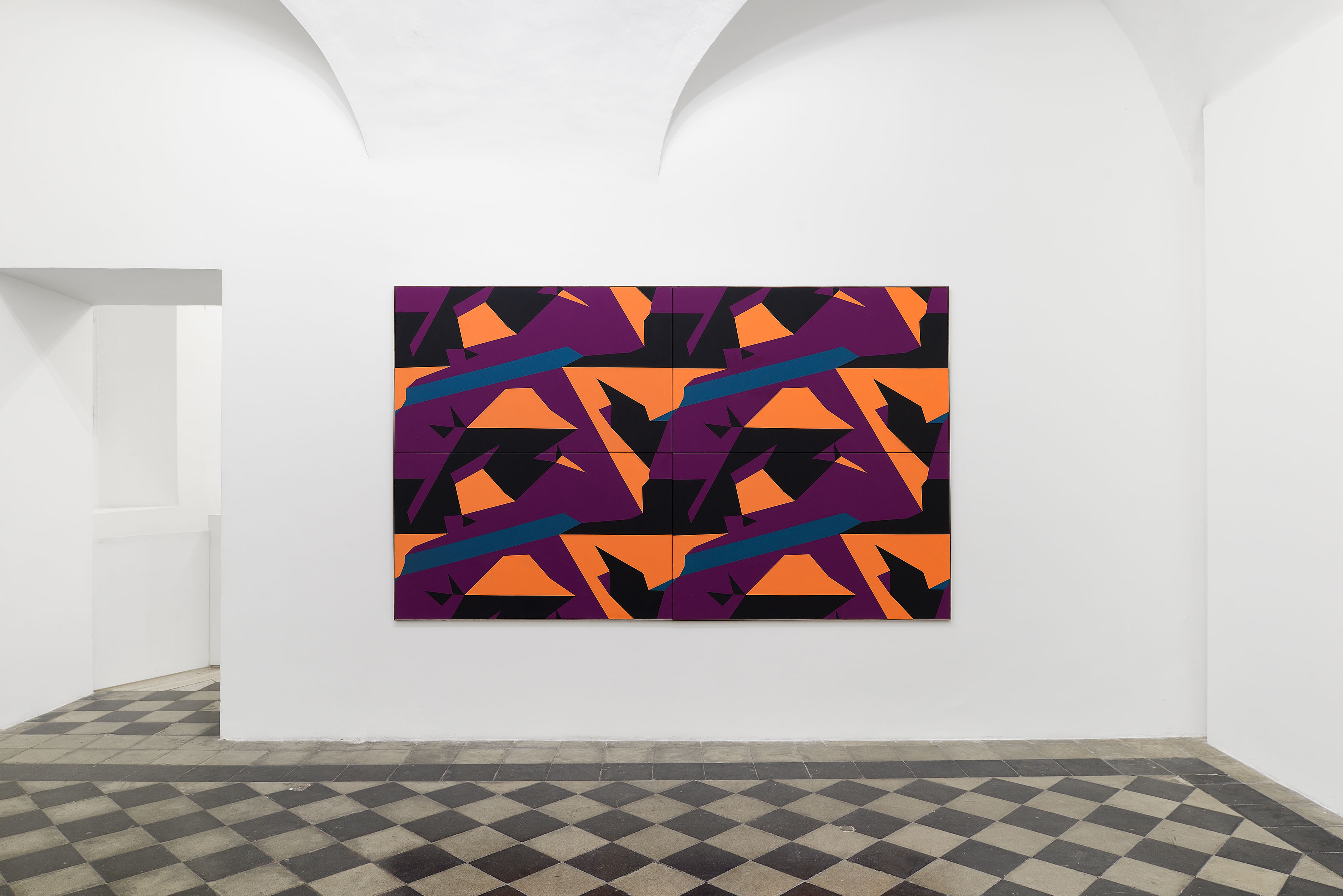
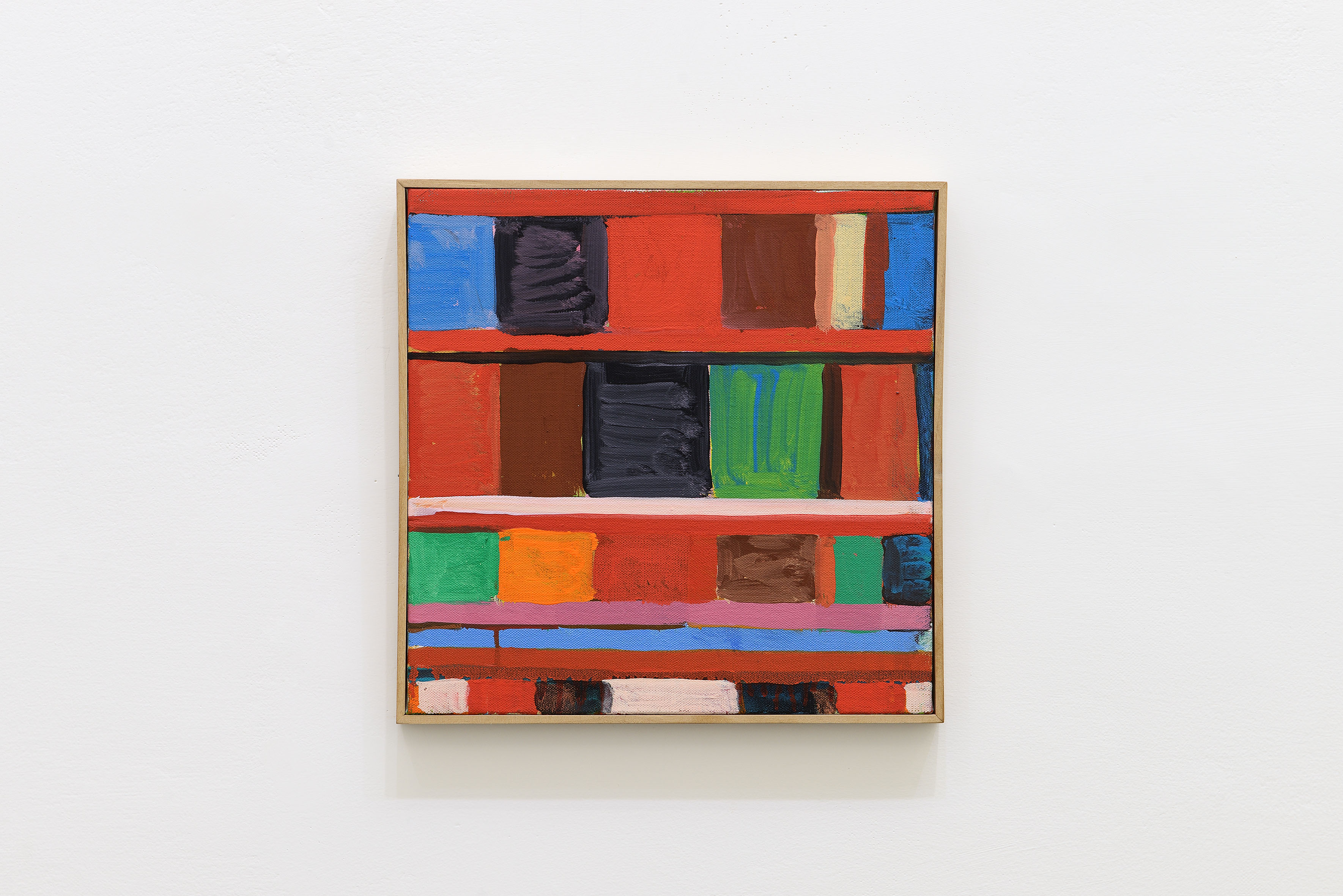
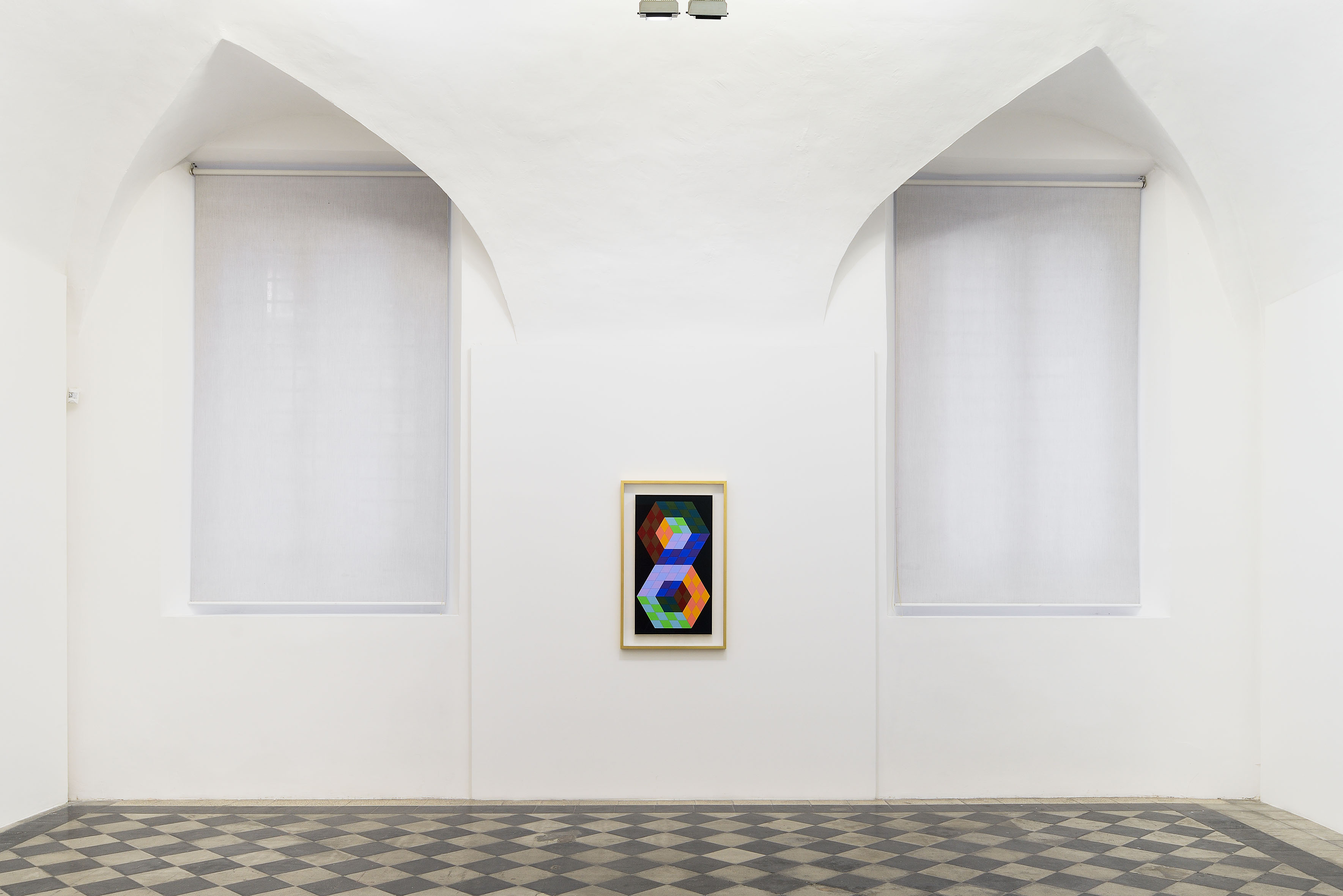
A key to understanding the exhibition concept, SAT – Foresta impigliata by Sergio Lombardo came to life in 1993 as part of the SAT cycle, within the broader framework of Stochastic Painting codified by the Roman master beginning in 1980. The large work, composed of four modules, establishes an important methodological precedent both in Lombardo’s research – where he uses double-toroid figures for the first time – and in the dehumanization of pictorial and compositional technique. This methodical and cyclical mode of inquiry reappears in two works by Victor Vasarely, Turkiz (1962) and Tridim – + – (1968–72), clear examples of the attempt to deconstruct geometric abstraction in the direction of Optical Art (Op Art), of which Vasarely was a pioneer and precise theorist, as further confirmed by the publication of his Yellow Manifesto. The “grid” thus becomes the expression of a theoretical framework upon which to construct painting, starting, especially in Lombardo, from an initial criterion of randomness. This same openness to an ordered chaos emerges in the work of Stanley Whitney and Bernard Frize. Whitney, while consciously avoiding the idea of a schema, finds himself inadvertently drawn into it through the application of the dense color fields in Stay Song Series 6 (2004), which alternate like a jazz improvisation. Frize, on the other hand, exploits the very potential of constraint through the “all over” technique, covering the entire surface of the canvas. The resulting paintings are composed of semi-random forms, echoing the Surrealists’ concept of “objective chance” and Claude Lévi-Strauss’s anthropological notion of “bricolage.”
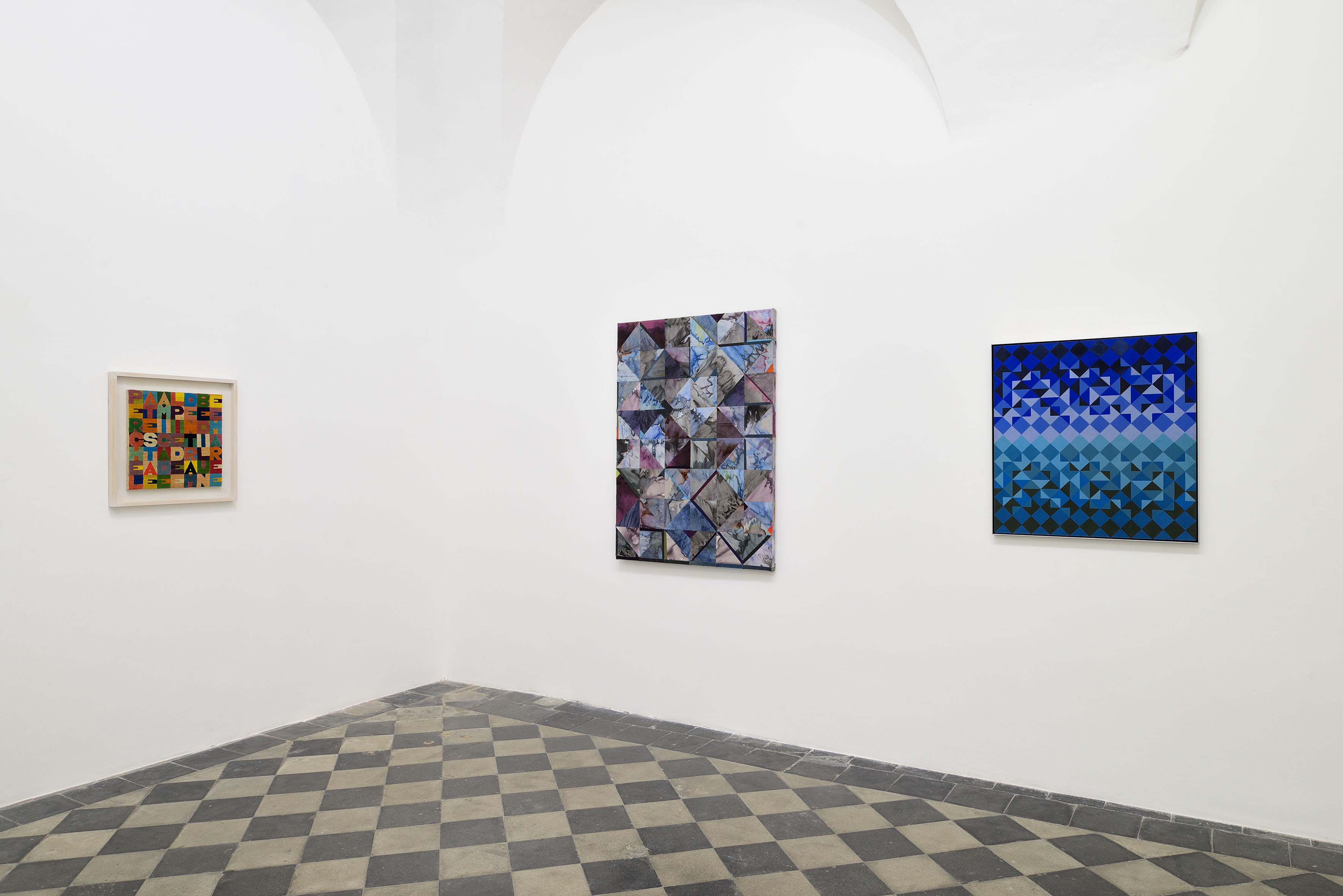
The rhythm impressed upon the work, also reappears in Alighiero Boetti’s tapestry Perché la testa è amica del piede ed entrambe di lune e maree, evidence of a poetic lightness capable of breaking apart the compositional grid.
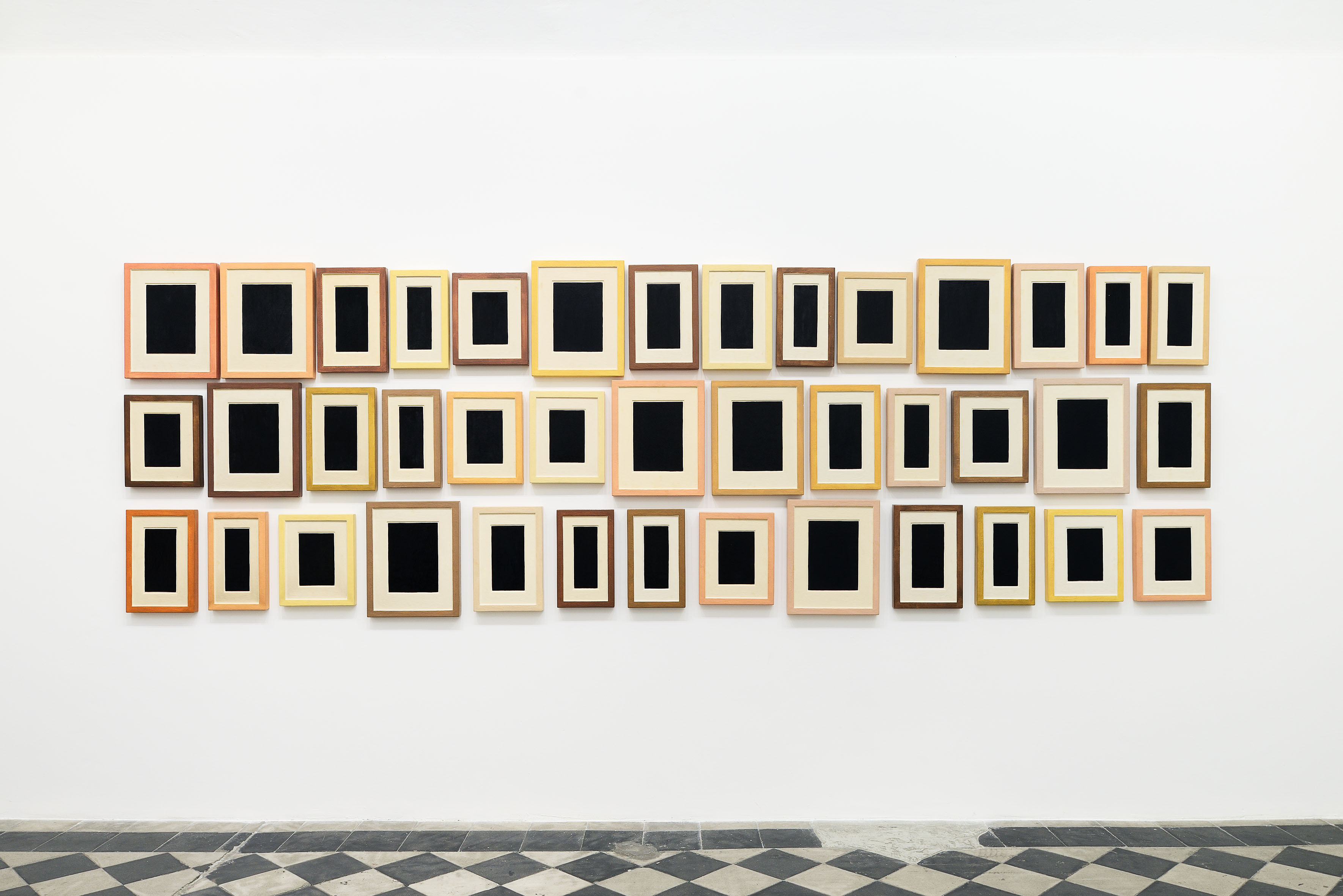
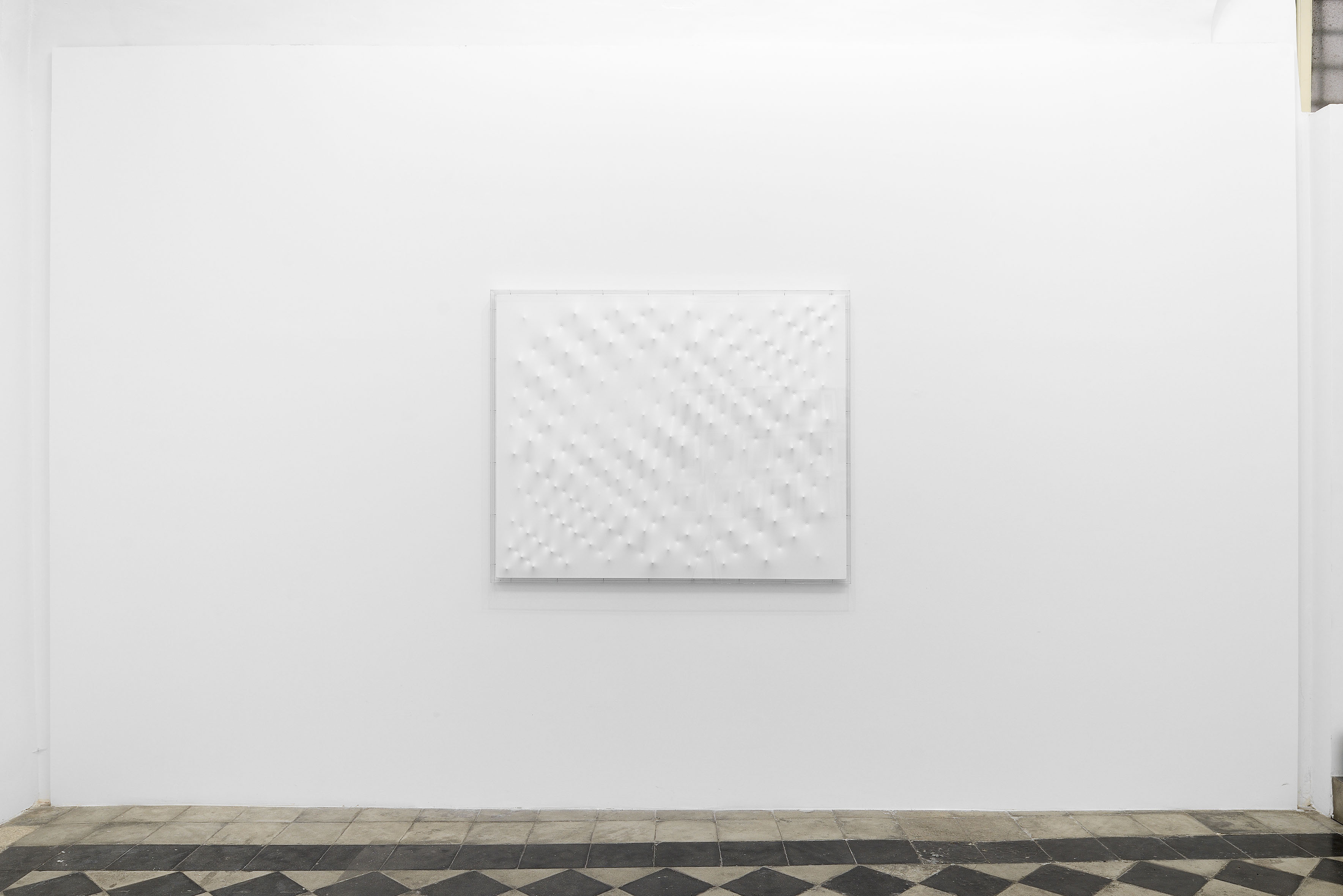
A more insistent rhythm distinguishes the works of Enrico Castellani and Allan McCollum. Castellani’s Superficie bianca (2007) recalls the spatialist research of the Azimuth group, leading the viewer through the opening carved by Lucio Fontana and followed by Agostino Bonalumi, Piero Manzoni, and Castellani himself, toward a new way of conceiving the presence and vitality of the artwork. The indistinct flow generated with order through the extroflections practiced by the Venetian artist appears at once delicate and assertive in affirming the work’s presence in space. At the opposite pole of Castellani’s optical white, Allan McCollum stages the seriality of contemporary society through the dense black of his Forty Plaster Surrogates No. 4 (1990). Here, the grid becomes synonymous with standardization, with mass production pushed to the point of alienation, in an installation solution that powerfully echoes the idea of modularity and interchangeability of components, all different and all seemingly identical.
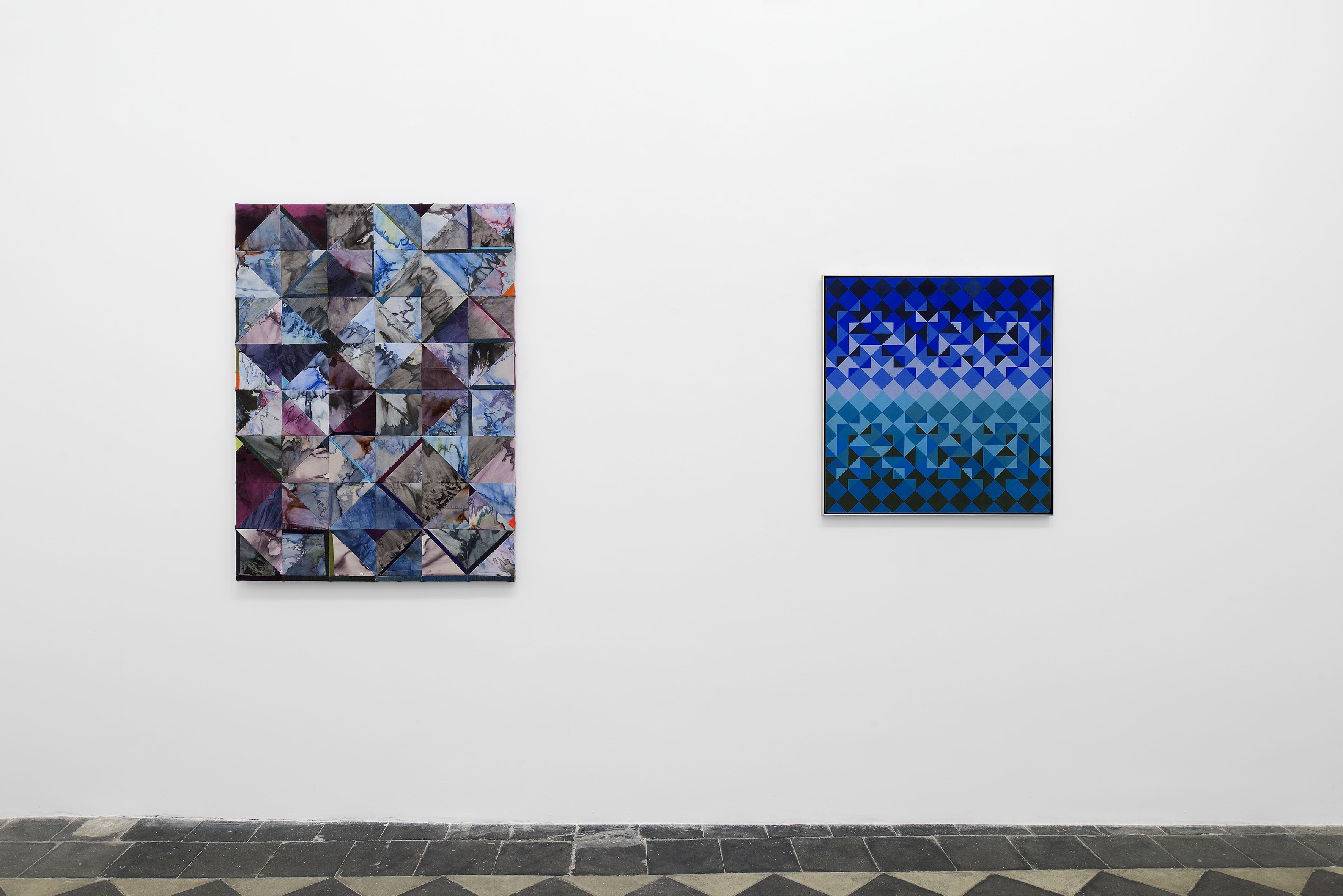
Through the recent works of Jonathan VanDyke and Sean Shanahan, the transformation affecting the idea of the “grid” reaches the present in two completely opposite outcomes. For Shanahan, the modularity of the works and their tone-on-tone chromatic pairings constitute a near-ascetic narrative nullification; for VanDyke, by contrast, the grid becomes a technical and meditation device for social storytelling that reflects on the passage of time and transformation of materials through slow, quiet, long processes: scraps of clothing worn by people close to him are sewn together as a testament to a reunited fragmentation, a grid once again welded back together.
Download here Full Documentation
installation views, Ph. Roberto Apa